
All Episodes of Tennessee Valley Mornings
May 20, 2026
From Rockets to Genomics: Huntsville’s Expanding Biotech Economy
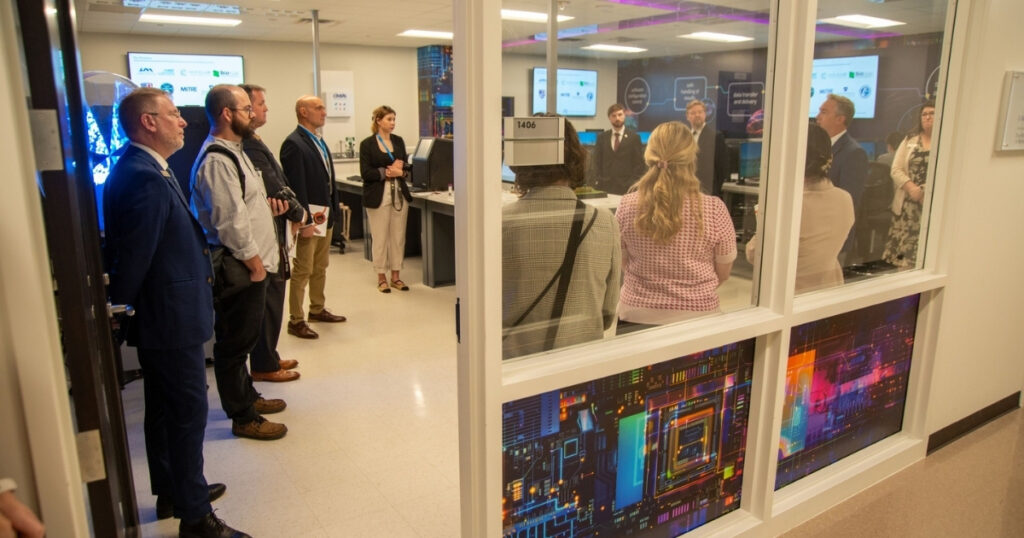
Biotechnology is no longer just about healthcare. It’s becoming central to national security, food production, artificial intelligence, and even the future of space travel. On this episode of Tennessee Valley Mornings, HudsonAlpha President Dr. Neil Lamb joins Erich Brukner to discuss why Huntsville is attracting national attention as an emerging biotech hub and how the work happening at HudsonAlpha could help shape the future of the country.
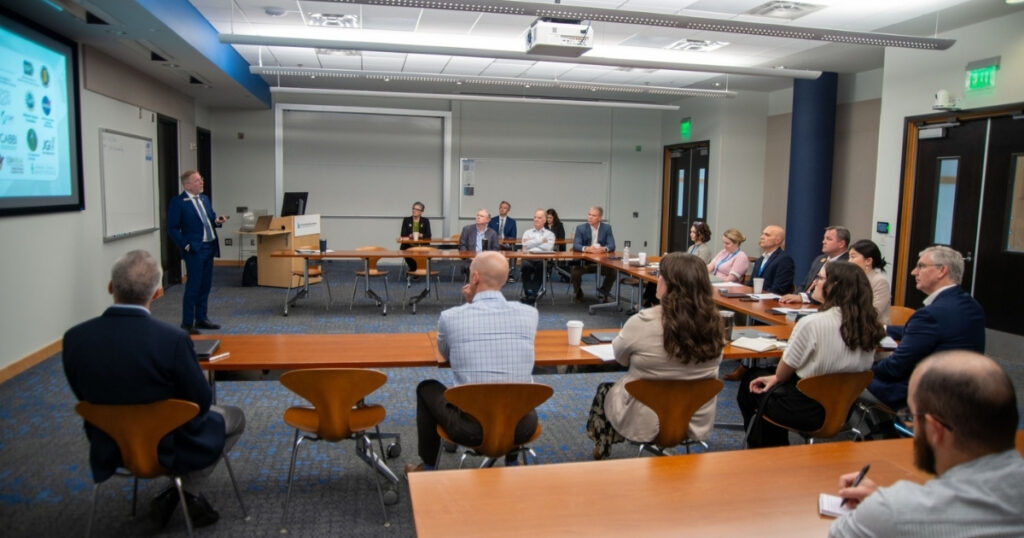
Erich Brukner Well, from rockets to radar. Huntsville has long been known as a city built on innovation and national defense. But increasingly, another field is putting the Rocket City on the national map. Biotechnology. And recently, the National Security Commission on Emerging Biotechnology made Hudsonalpha its only stop in Alabama during a nationwide tour focused on America’s biotech future and its impact on everything from healthcare and agriculture to cybersecurity and national security. Joining us now, Doctor Neil Lamb, president of Hudsonalpha Institute for biotechnology, to talk about why Huntsville is becoming such an important player in the biotech economy and why the work happening here could shape the future of the country. Welcome in. Glad to be here. So Hudsonalpha was the National Security Commission on Emerging Biotechnologies only stop in Alabama. What do you think made Huntsville and Hudsonalpha specifically stand out on a national level?
Dr. Neil Lamb The commission is looking for innovative biotech hubs around the country that they can point to as examples of the future of biotech, and I think they were attracted to the fact that in the middle of this incredibly Stem focused community here in North Alabama, you also have this biotech hub that has independent research focused on both human health and agriculture, and more than fifty biotechnology companies, and a workforce development and education program, and increasingly deep connections between Hudsonalpha and many of the the space and the bio bio cybersecurity components that make Huntsville so strong.
Erich Brukner And for people who hear biotechnology and immediately think health care or, you know, how much broader is the field really becoming, especially when it comes to national security and economic competitiveness.
Dr. Neil Lamb Biotech is actually a really broad category. It essentially means you’re taking something living or something that has come from a living organism, and you are using it to create a product or a tool. So yes, we certainly think about it in terms of how do we better diagnose disease and how do we think about new treatments and therapies in the healthcare arena. But it also is important for how we think about the way that we create sustainable food sources in the middle of, of changing environments. It’s important for how we think about the way that we monitor and manage large amounts of data and keep personal health information secure. All those components have a role in kind of the broader sense of what biotech looks like.
Erich Brukner And one of the big themes from the visit was that food security is national security. Can you unpack some of what that really means in practical terms?
Dr. Neil Lamb Sure. Uh, we have an Increasingly growing world population that we have to be able to feed when we have less and less farmable land to create those food products. So that is a challenge that we have to solve. And biotech is one of the tools that will actually help us solve that. How do we create better varieties of crops that develop, that produce higher yields, more nutritious foods? How do we think about alternative sources of everything around proteins? For example, uh, in order to keep a nation safe and secure. You have to have enough food to feed people, and you have to be able to know the food that is coming into your country from other places, and the ability to track and source it and show that what is coming in is actually what you think it is and doesn’t have anything that potentially is harmful mixed in.
Erich Brukner And Hudsonalpha has become a global leader in plant genomics. What are researchers here in Huntsville doing right now that could directly impact crop yields, climate resilience, or even that global food stability.
Dr. Neil Lamb At the end of the day, all plants, whether they are the the rose bush outside your window or it is the crop of soybeans or peanuts that are being grown, they all contain DNA. DNA is the genetic recipe that provides the instructions for how those plants to do what they do, but it also provides the instructions for how they take in fertilizer, how they, um, how they produce flowers or foods. The timing, if you understand the genetic recipes, then you have the ability to improve crops to help them sip water instead of gulp water. If you’re in places where water is scarce, to help them better take up the nitrogen that is in the fertilizer. So you put less fertilizer into the soil to think about the way that you can take plants that right now, maybe you have to plant every year and consider a perennial version where you plant once and you harvest multiple times. All those possibilities sit within an understanding of DNA, and our scientists are, number one, interpreting those genetic recipes, in some cases for the very first time with certain plants, and then figuring out how those recipes actually lead to the traits that consumers and, and industry is interested in. And then how you can use that information to speed new varieties of crops. So once you understand the tools and how you use them, you have broad application and Hudsonalpha has some of the best in the world expertise in those fields.
Erich Brukner And the commission talked a lot about AI driven discovery. So how are artificial intelligence and biotechnology beginning to intersect in ways that might surprise people?
Dr. Neil Lamb We are living in the I guess, in the generation in the era of biological data, where understanding how this how cells behave, how genetics is involved, has a huge impact in health and agriculture and security. All that data that is being generated has to be analyzed and interpreted. It used to be that the issue was it would take us years, in some cases decades to generate enough data to run the right analyses. Now you can generate the data very, very quickly. So we are drowning in data. It’s a great problem to have. And AI can help us build the first level of interpretation. Sort out what’s important from what’s not, and then have a set of human eyes dig into it and take it to that next stage. So the field of biology is dependent upon AI and machine learning and all of these other tools in order to help us quickly make meaning from all of this data that we now have around us.
Erich Brukner And Huntsville is already known for aerospace defense engineering. How naturally does biotechnology fit into that whole ecosystem?
Dr. Neil Lamb It fits in really, really beautifully, especially when you think about the work that’s being done by NASA as we think about long term space habitation. Uh, you know, NASA scientists have to figure out how are we going to create enough food for individuals to, to have enough to eat on long term journeys? How are we going to create the oxygen that they breathe and get rid of the carbon dioxide that they breathe out? And how are we going to be able to purify water? All those things can be done chemically, but plants do them automatically. And so the work of of hudsonalpha in the plant world really is a natural fit. We actually just co-hosted a technical interchange meeting with NASA around that very thing. And then you can talk about human health and how do we think about understanding the impact of your genetic predispositions and how that how your DNA interacts with your environment for chronic disease long term, and how we think about the way we would manufacture medications on the go. So that whole idea of of space exploration and long term space flight is a beautiful connection into the work at Hudsonalpha. And then you think about the groups that are doing drone development and, and analyzing land, analyzing crops. There’s a component of Biosurveillance that sits in that to understand, are there new pests that are coming in? Are there new diseases coming in? And genetics and biotech has an important role to play there as well.
Erich Brukner There’s a lot of conversation nationally about the US competing with countries like China in biotech. What does that competition look like and how important is it that America maintains leadership?
Dr. Neil Lamb It’s critically important that America maintains the leadership in the field of of biotechnology. There are other countries like China that have made massive investments into building out those biotech ecosystems and closing those markets to other countries. We have to be sure that we continue to make the kind of investment that leads the world in developing this new innovation and how we protect it, and how we ensure it’s used appropriately.
Erich Brukner And genomic data seems incredibly powerful, but also very sensitive. So how do you balance innovation with privacy and security concerns?
Dr. Neil Lamb That’s a great question. You’ve hit, I think, on one of the key challenges, and the answer is not always going to lie in the same space as you think about the different, the different arenas and the different applications, we have to have the data to be able to do the analysis. So how do we collect that data? How do we appropriately get the right permissions? How do people, if it’s human data, provide permission, knowing fully what it is they’re stepping into and what they’re providing? How do you think about issues around privacy and how much are we willing to trade off some level of giving up a little bit of, of data privacy in order to have a more secure world or a better future. There’s not one easy answer for that. So you’ve got to have multiple conversations with all your different stakeholders. And that also requires some education on the front end so that people aren’t just making a knee jerk response, but they’re coming to the table really from a place of of knowledge.
Erich Brukner Coming up in the next fifteen minutes, more of our conversation with Doctor Neil Lamb, president of Hudsonalpha Institute for biotechnology. Talking about why Huntsville is becoming such an important player in the biotech economy. This is Tennessee Valley Mornings on eighty nine point three.
Erich Brukner This is Tennessee Valley Mornings on 89.3 WLRH My name is Erich Brukner. More conversation with Doctor Neil Lamb, president of Hudsonalpha Institute for biotechnology. Recently, the National Security Commission on Emerging Biotechnology made Hudsonalpha its only stop in Alabama during a nationwide tour focused on America’s biotech future and its impact on everything from healthcare and agriculture to cybersecurity and even national security. One thing that stood out from the commission’s visit was the phrase bio industrial economy. So what does that future economy actually look like and how close are we to it?
Dr. Neil Lamb We talked just a couple of minutes ago about the fact that this is the age of biology, that we are using biological information not only to help us live longer and better, but also to create products from food to plant fibre based construction materials to how we think about 3D printing, uh, artificial organs and replacement cells. All of that falls into the bio economy. And that requires significant investments in research and development. And then how you help move those ideas into commercialization and translation, and then how you prepare the appropriate regulatory environment and how you make sure that there’s a real market and that the public is is going to be excited and is going to want to consume those products. So that really soup to nuts fits under this broad bioeconomy headline.
Erich Brukner So Hudsonalpha hosts more than fifty biotech companies on your campus. What makes that collaborative ecosystem work so well?
Dr. Neil Lamb It’s an incredibly beautiful space to be in a space where people can see each other, where there’s a lot of glass, where there’s a lot of interaction. The building is the campus entirely is designed around opportunities for people to have what our co-founder, Jim Hudson calls random collisions of brilliance, where people will intentionally interact as they walk along the tree lined park that sits along the spine of the campus, or they see each other when they’re in the line at the Anita Loya Café to get breakfast or lunch, or they come together on a regular basis for programs like Science on Tap, where we’ve got somebody from one of the companies speaking, somebody from one of the research labs speaking, and everybody gathers for pizza and conversation in the middle of it. The campus is intentionally designed around this idea of people interacting and engaging with each other, and along the way, moving great ideas into real world applications.
Erich Brukner So Congress is considering initiatives to sequence living things on public lands. What kind of scientific breakthroughs could come from projects on that scale?
Dr. Neil Lamb This is the America’s Living Library Act of twenty twenty six, which suggests or recommends that organisms are sequenced. And these could be plants, animals, microorganisms like bacteria on all public land. And the idea is that the genetic recipe book of life that nature has come up with a way for. To solve almost any problem you can think of. How do you detoxify challenging environments? How do you create. Different varieties of enzymes that carry out functions that we aren’t even aware of. How do you help plants grow under drought conditions or high heat or extreme cold? Being able to analyze, to sequence all of those living things in those different environments gives us insight into solutions for tools that we right now are struggling to try to figure out how to solve. So it opens up the genetic encyclopedia for ways that it can potentially be used going forward. It really is building out that that collection of all these possible options, you know, solutions to problems that we either are aware of or haven’t even thought about yet.
Erich Brukner At Hudsonalpha you put a huge emphasis on education and bio literacy. Why is it so important that everyday people, not just scientists, understand biotechnology?
Dr. Neil Lamb You and I make decisions about biotech every day. Most of the time without realizing it. What we choose when when we’re at the grocery store, the way we think about the medications that we may take or the the probiotics or supplements that we choose to take, how we make decisions about the things that go in our house, an understanding of biotech and the pros and cons and the different ways to think about these decisions provides for a more informed, more informed consumer. And that’s an alpha. We think that a bio literate society, a society that understands the benefits, but also the challenges around the field of biotech, is able to make more informed decisions, but also better to shape the direction that as a country that we pursue. So public education student, uh, student experiences, kits in classrooms, teacher training, uh, field trips, all those things are a cornerstone of what we do to help move the field along.
Erich Brukner And what are some examples of how students in Alabama are getting some of that hands on exposure right now?
Dr. Neil Lamb If you are a middle school, a seventh grade student, or a ninth or tenth grade student, you are likely across the state using kits that have been crafted by Hudsonalpha in partnership with the Department of Education. Your science teachers are likely receiving ongoing professional learning support from Hudsonalpha, providing them new content every year. If you are attending a summer camp at Hudsonalpha, we are opening students eyes to new opportunities and careers and then there are a whole set of programs from certifications and skills development experiences to internship opportunities to help train that next generation of worker so that students who love these kinds of fields can do this work here in Alabama, not having to go to Boston or the West Coast. They can do that here in in Dothan. They can do this in Birmingham. They can do this in Huntsville. So Hudson Alpha’s education program reaches across the state. Actually, it reaches across the across the globe, but very intentionally to provide hands on materials and experiences for the students right here in our own backyard.
Erich Brukner So it sounds like we might even be reaching a point where biotechnology literacy could become as important as computer literacy.
Dr. Neil Lamb I think that there’s a real argument to be made for that.
Erich Brukner What kind of jobs and careers will exist in biotech five, ten years from now that might not exist today.
Dr. Neil Lamb So you’ve got the jobs that are going to be very specific right in the center of biotech. We’ve already talked a little bit about AI, about being able to use that kind of computational know how. I think we’re going to see more and more in the field of, um, of automated advanced manufacturing around bioprinting. I already mentioned bioprinting of, of cells and of, of organs. I think that you’re going to see more roles in agriculture tying together, uh, data that we are learning directly from the crops with how we build, uh, better, more productive plants. I also think though, there’s a whole field that is adjacent to biotech, that is people that are interested in entrepreneurship, people that are interested in, uh, in how we do science communication, people that are thinking about how do you source the right talent for these kinds of roles? How do you think about managing the finances of these? So when we talk about biotech, yes, people tend to think of people that are working in a laboratory in a white lab coat, but the field goes so much further beyond that into healthcare and agriculture and data and then all the supporting roles around it. Uh, I think probably you name me a career and I could almost always find a link back to biotech for it.
Erich Brukner Radio DJ.
Dr. Neil Lamb Radio DJ is communicating the science and why it is so important and giving people a better, a better understanding of what the field of biotech looks like.
Erich Brukner I love it. So what excites you most personally about where Hudsonalpha is headed over the next few years?
Dr. Neil Lamb I hope you can tell just from some of the topics that we’ve discussed and the enthusiasm in my voice. Biotech has the ability to allow us to confront a changing world where the way we’ve historically dealt with human health and disease or food security, or navigating through. Security and defence. Biotechnology offers us the opportunity to build new solutions for that changing world. Hudsonalpha is a place that uses the power of genomics to make the world a better place, whether that is identifying and treating disease or addressing food insecurity, or creating more jobs for people right here in their own in their own backyard. Every day I am excited about the new opportunities, the new things that are being discovered in our labs, the new way that they’re being applied with the companies that are on campus, and the way that we are exciting and training the next generation. It’s never dull at Hudsonalpha. There’s always something happening that points us towards the future.
Erich Brukner And for listeners who may not realize the level of cutting edge research happening right here in Huntsville, I think they do now if they’ve been listening. What do you hope they take away from, you know, this recent visit in the national spotlight on Hudsonalpha?
Dr. Neil Lamb Number one, I hope that they’re proud of their community, that they recognize that the Nscb identified Huntsville as a stop on their road show because they saw something different, something unique, that spoke to how we build out these hubs of biotech innovation. And yes, Hudsonalpha sits at the center of that, but so do all the other relationships with our partners. And being in a community that values learning and that wants to support these kinds of biotech innovations. So I think the key takeaway is pride in our community and excitement and enthusiasm about what the future holds.
Erich Brukner Fantastic. Doctor Lamb, thank you so much for joining us. It’s fascinating to see biotechnology becoming part of the national conversation, not just in healthcare, but food security, cybersecurity, manufacturing, defense, etc. and it’s remarkable that so much of that work is happening here in Huntsville at Hudsonalpha Institute for Biotechnology. Can learn more about Hudsonalpha research education biotech initiatives at their website, hudsonalpha dot org.

Erich Brukner
General Manager, WLRH-FM | Division Director of Radio, Alabama Public Television

Marsha Arends
On-Air Host & Producer

Katy Ganaway
Program Director and Host of Arts Underground
Alex Hall
On-Air Host and Program Producer
Bob Nance
Producer

Donate Your Vehicle to WLRH!
Support the programs you love by donating your old vehicle to WLRH!

Contact Your Local WLRH Hosts
Click here to contact WLRH hosts! You may also contact us by phone at (256) 895-9574 weekdays between 9 a.m. and 1 p.m.